

Communicating MEACAM Forecases in an Early Warning System
MEACAM Research Report #4
November 2025
Summary
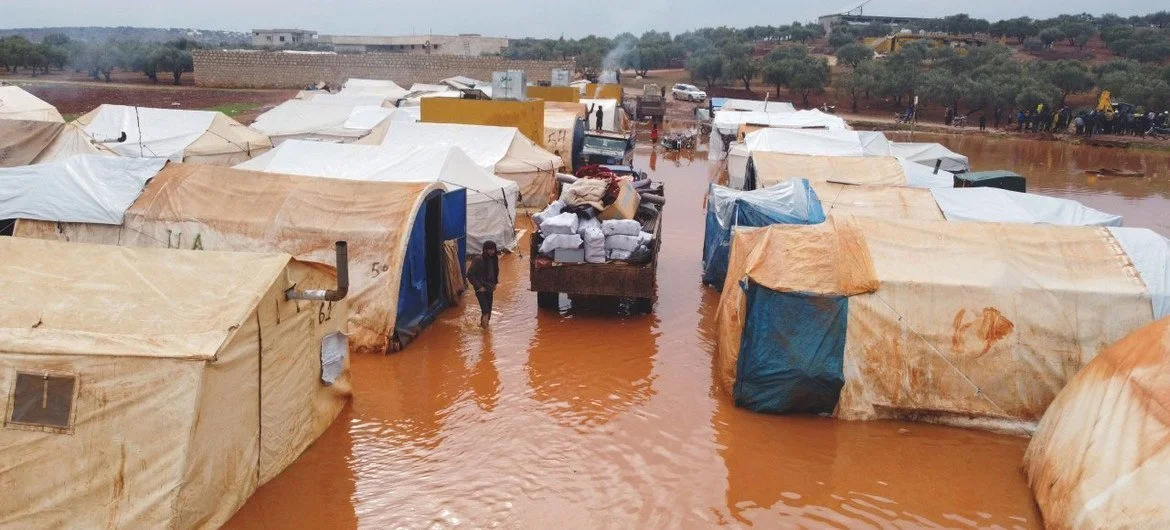
This research paper outlines how hazard predictions and exposure information from Mercy Corps' Middle East Anticipatory Climate Action Model (MEACAM) can be integrated into an early warning system (EWS). MEACAM provides agricultural drought and flood predictions, identifies affected locations, and estimates the population and hectares of cropland exposed to the forecasted hazards in Iraq, Syria, and Yemen. The MEACAM platform is free to use and automatically update s flood predictions every three hours andagricultural drought predictions every 14 days. MEACAM ’s early warning information aligns with the first two pillars of the United Nations Office for Disaster Risk Reduction ( UNDRR) early warning system: disaster risk knowledge, and hazard detection, observation, monitoring, analysis, and forecasting . This report reviews the components of an EWS , considers how MEACAM fits within an EWS, and identifies the steps and actors involved in the development of an EWS in Iraq, Syria, and Yemen. This report draws on a review of relevant literature, professional experience implementing an EWS, 2 and engagement with key stakeholders in Iraq, Syria, and Yemen.
The Syria-specific sections provide an overview of the major natural hazards in the country and an update on the structure and progress towards a centralized EWS managed by the new government. During engagements in Syria, the MEACAM team learned that the new government is developing a multi-hazard EWS. Although in the inception phase, the Ministry of Emergency and Disaster Management (EDM) encouraged external organizations to contribute to the system, in close coordination and collaboration with the EDM, to ensure strategic alignment.