

Syria Monthly Report
January 2026
Executive summary
Regional and International
Syria’s strategic environment shifted toward transactional diplomacy in December 2025 and January 2026, highlighted by President Ahmed al-Sharaa’s second official summit with Vladimir Putin in Moscow. While Damascus leveraged US pressure to renegotiate Russian basing terms, the Kremlin maintained a non-negotiable 49-year lease on its Hmeimim and Tartous facilities. This period also saw a landmark reversal of US policy through the unconditional repeal of the Caesar Syria Civilian Protection Act, which ended broad-based sanctions and triggered immediate private-sector interest, including the launch of the Syrian-British Business Council. Simultaneously, US-mediated security talks in Paris between Syria and Israel suggested the establishment of a joint fusion mechanism for intelligence sharing. However, a territorial impasse over control of Mount Hermon persists, with Israel signaling its intent to maintain military freedom of action through strikes on Hezbollah supply lines.
Politics and Policy
The political landscape was defined by a sharp polarization between institutional reintegration and radical autonomy. As-Sweida Governor Mustafa al-Bakkour launched a "comprehensive settlement" initiative to bring As-Sweida back into the state fold. Conversely, Druze spiritual leader Sheikh Hikmat al-Hijri explicitly rejected these Damascus-led solutions, calling for an independent Druze region and designating Israel as a security guarantor. To counter this, Damascus is utilizing "humanizing" strategies, such as evacuating students from Hasakah, settling the academic status of local students and providing critical cancer treatments for As-Sweida residents in Damascus, attempting to erode the influence of separatist discourse through service provision.
Conflict and Security
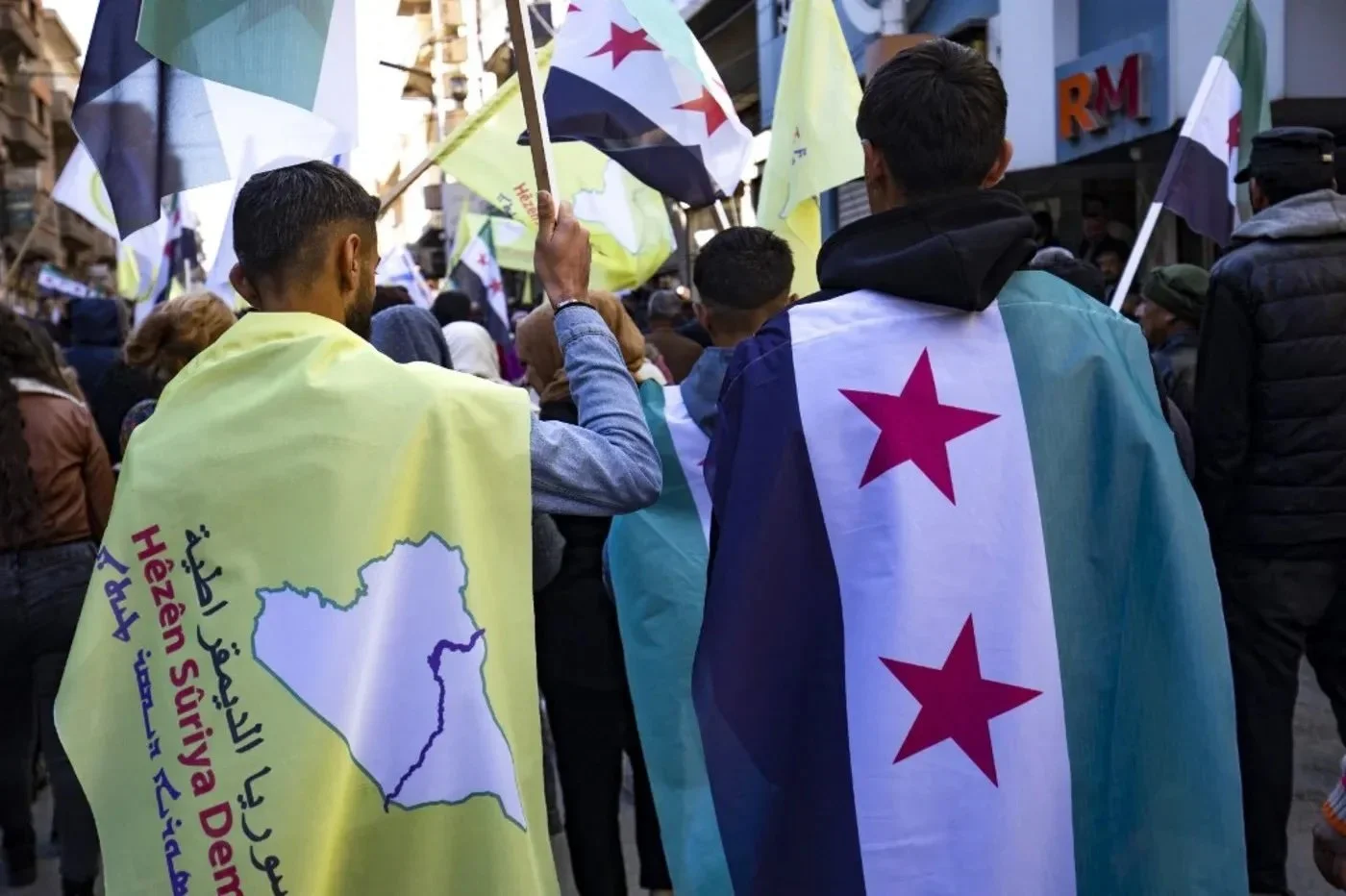
Internal security reached a major milestone with the announcement of a "Comprehensive Integration Agreement" on 30 January, mandating the phased absorption of SDF military and administrative structures into state institutions. This breakthrough followed a rapid government offensive that contracted SDF territory and increased diplomatic pressure from Western partners. Moreover, the government intensified its anti-narcotics campaign, seizing 500,000 Captagon pills in Hama and liquid cocaine in Lattakia. These operations notably targeted the "deep state," resulting in the arrest of high-ranking officers from the former regime. Meanwhile, Damascus formally asked Lebanon to handover 200 former regime officials accused of plotting counter-insurgency activities from Lebanese soil.
Economy, Markets, and Services
The energy sector underwent a massive transformation, exceeding the 3,000 MW generation barrier for the first time in years due to gas import deals with Jordan and Egypt. However, this operational success was met with a "billing shock" as household costs jumped from 60,000 SYP to 1.5 million SYP following the implementation of a tiered pricing system and reduced consumption caps. Agriculture saw a temporary stabilization of the wheat baseline due to heavy rainfall and the distribution of 5,700 tons of subsidized seeds. Nevertheless, the northeast faces a systemic collapse of its rural economy as a Foot-and-Mouth Disease outbreak infected 30% of livestock and soil salinization rendered vast tracts of land unproductive.
Humanitarian Updates
A worsening humanitarian crisis was fueled by the displacement of over 170,000 people due to recent military escalations in Aleppo and the northeast. Vulnerability was exacerbated by a the 31 December snowstorm that destroyed 5,000 shelters across northern displacement sites. A severe funding shortfall—securing only $29 million of the required $112 million for winterization—left thousands without adequate heating or protection. Internationally, the situation for Syrian refugees grew more precarious as Germany and the Netherlands tightened asylum regulations and promoted voluntary return programs, signaling a shift in European policy as Syria is increasingly deemed a safe country.