

Syria Monthly Report
November 2025
Executive summary
International Engagement
President Ahmad al-Sharaa’s historic summit at the White House redefined Syria’s diplomatic standing, resulting in a temporary suspension of key sanctions and accession to the Global Coalition against ISIS. In parallel, Damascus pursued conditional economic re-engagement with Beijing, while in southern Syria, a lethal Israeli strike on Bait Jan signaled Tel Aviv’s intent to enforce its security doctrine despite a renewed Russian military presence.
Security, Governance, and Political Stability
Public trials in Aleppo related to the March 2025 coastal violence began in parallel to sectarian violence in Homs and unprecedented protests in Lattakia demanding decentralization, exposing a widening trust gap between coastal communities and the central state. Internal stability faced critical tests as the government’s push for administrative credibility - marked by anti-corruption drives and intensified counter-narcotics operations - clashed with deep-seated regional grievances.
Economic Stability
The government adopted a strategy of managed stabilization, lowering fuel prices following the arrival of new Russian and Saudi supplies. However, food security remains precarious; authorities shifted to private tenders to bridge a significant wheat deficit and restructured bread subsidies, while agricultural output in the northeast contracted further due to political isolation and rising input costs.
Infrastructure and Services
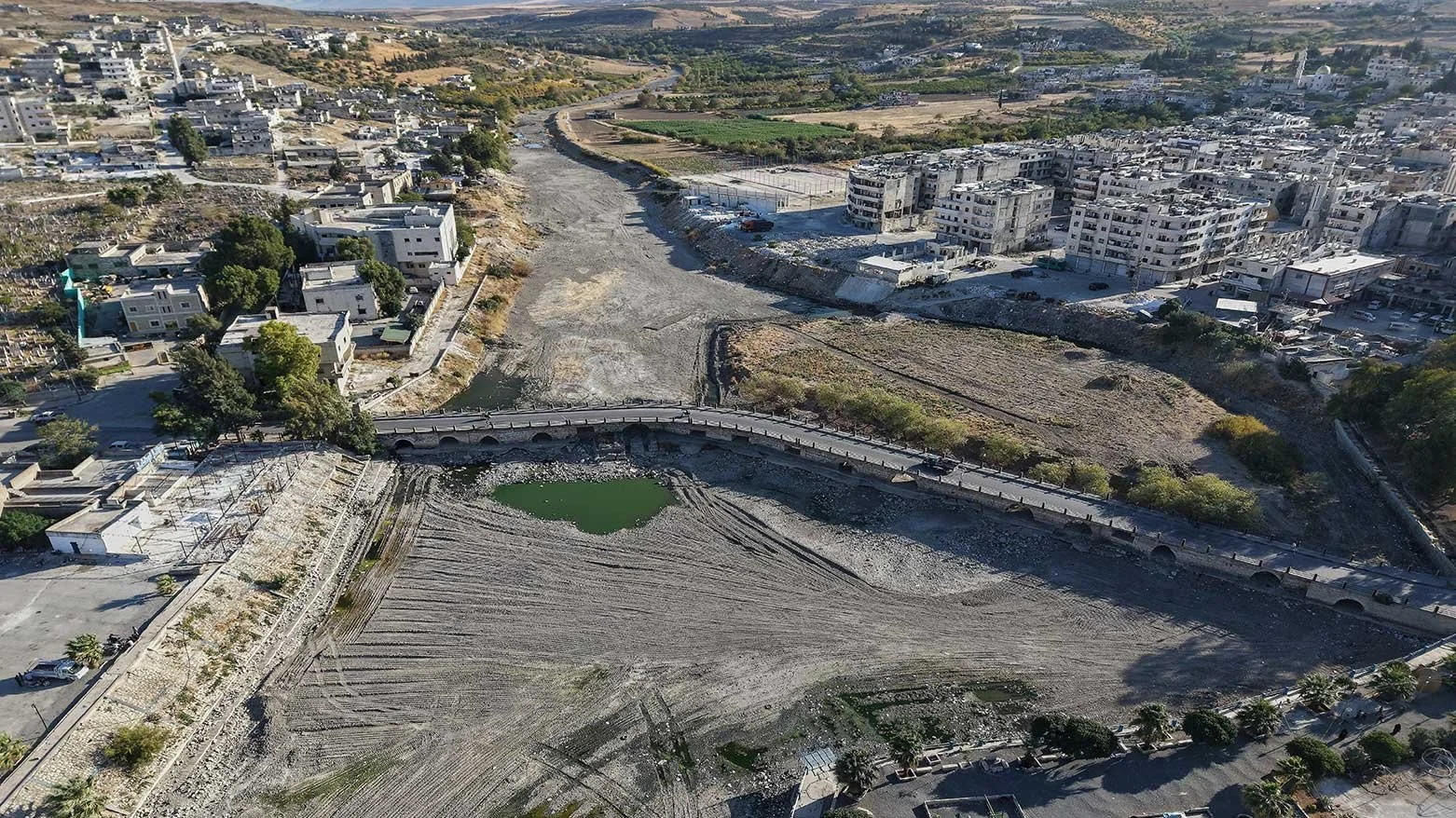
The energy sector witnessed a potential turning point with a landmark agreement involving Qatar’s UCC Holding to expand power generation, accompanied by improved supply in major urban centers. Conversely, water security reached a crisis level as the Orontes River dried up completely for the first time, devastating rural livelihoods, while humanitarian funding cuts threaten winterization support for millions of IDPs.