

Dismantling the Status Quo:
The 2026 Northeast Syria Offensive
January 2026
Executive summary
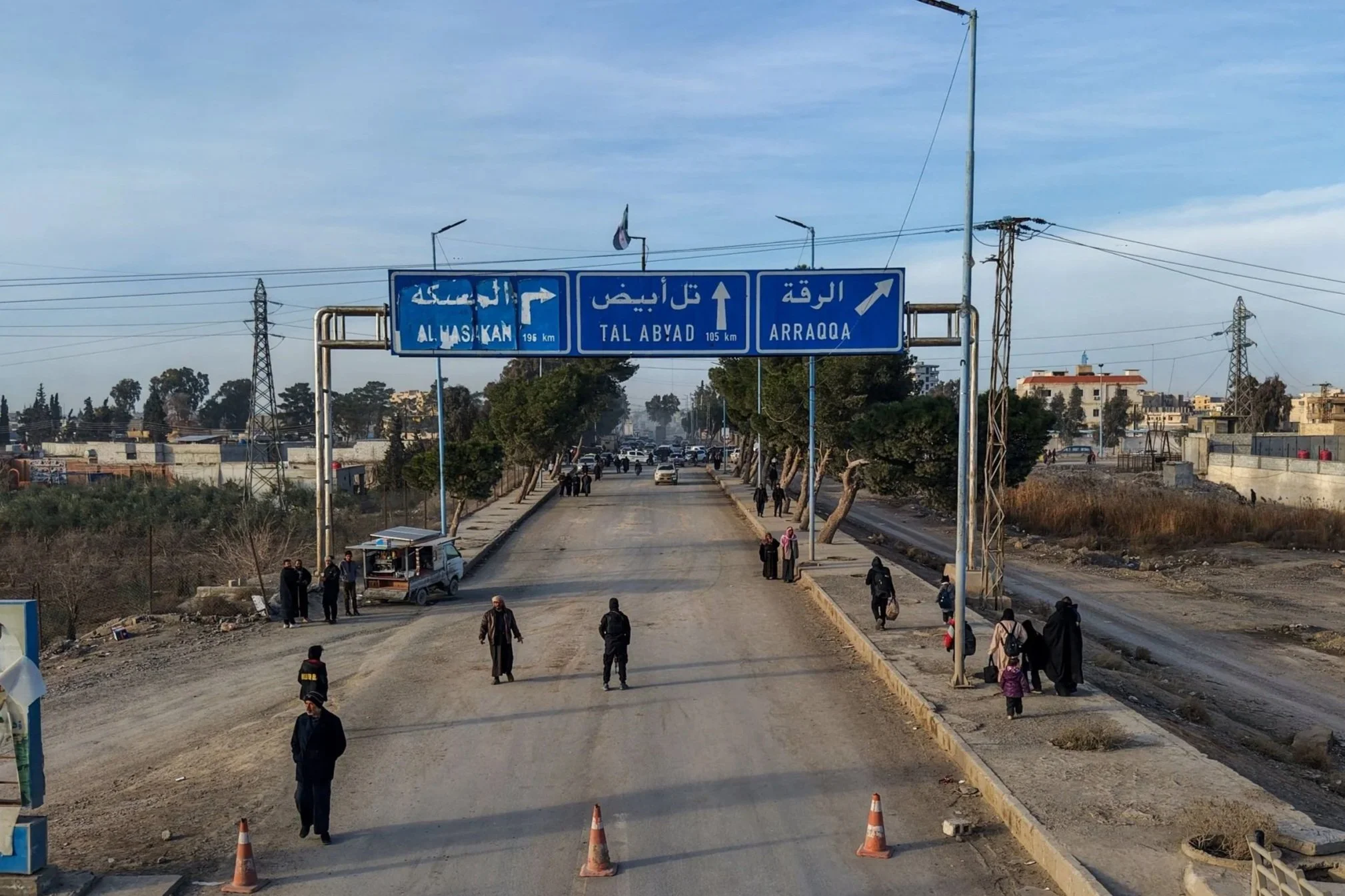
In January 2026, the political and military order that had governed northeast Syria for nearly a decade collapsed following a rapid offensive by the Syrian government and a widespread defection of Arab tribal forces from the Syrian Democratic Forces (SDF). This convergence undermined the SDF’s control over key areas and resources, fundamentally altering the balance of power in the region and exposing the shortcomings of the long-standing model of self-administration. The decisive factor was not merely battlefield superiority, but a strategic realignment of the tribes. Arab tribes in Deir-ez-Zor and Ar-Raqqa reassessed their position and decided to shift their support to Damascus. The alignment of key tribal actors with the central government effectively stripped the SDF of its remaining pluralistic legitimacy in predominantly Arab areas, rendering its continued military and political control unsustainable.
At the heart of the current crisis lies the failure of the integration process. Successive ceasefire frameworks collapsed due to Damascus’s insistence on integrating individual SDF fighters into state institutions—a demand rooted in the government’s doctrine of monopolizing armed force. This integration, however, threatens the SDF with organizational disintegration, internal fragmentation, and a loss of leadership cohesion. The resulting impasse reflects an asymmetrical power dynamic, with Damascus managing the reintegration process rather than negotiating autonomy. The erosion of SDF authority has also had immediate regional consequences. Insecurity in detention centers and camps in predominantly Arab areas has led to mass escapes of ISIS detainees, prompting the United States to prioritize emergency containment over long-term political arrangements. Humanitarian situations have varied sharply: while some government-controlled urban centers have seen a restoration of services, predominantly Kurdish enclaves face severe shortages due to the surrounding military pressure and control over infrastructure.
Looking ahead, three trajectories dominate the next six months: a slow, state-led reintegration process that marginalizes the SDF as an institution; Or a renewed military confrontation that transforms Kurdish forces into a local insurgency; or a temporary arrangement "on paper only" that maintains fragmented control while accelerating the financial and organizational decline of the Syrian Democratic Forces.